

Global Qualitative Interviews Fail for One Simple Reason
April 3, 2026
How to Make Concept Testing a Better Predictor of Demand
April 25, 2026
Many concept testing failures begin the same way: a product concept performs well in research—but fails in the real market.
Strong survey reactions often overstate real demand.
We tested the same new product concept under two viewing scenarios.
Short Exposure: respondents viewed the concept for 15 seconds only.
Extended Exposure: respondents viewed the concept for as long as they wanted.
Stated likelihood to purchase stayed the same. What changed was how buyers explained the concept—and where it fit into their lives.
This study focuses on what happens within the earliest stages of the decision system—before extended review begins.
Executive Summary
- Likelihood to purchase was the same after 15 seconds as after extended review
- What changed was not stated likelihood to purchase—but the reasons behind it
- Short exposure showed first reaction; extended exposure showed where the concept fit into respondents’ lives—and where it did not
- Initial interest can be broad. Actual demand is often narrower.
The Concept Tested
Respondents in both scenarios evaluated the same new coffee maker concept featuring personalized brewing through handprint recognition.
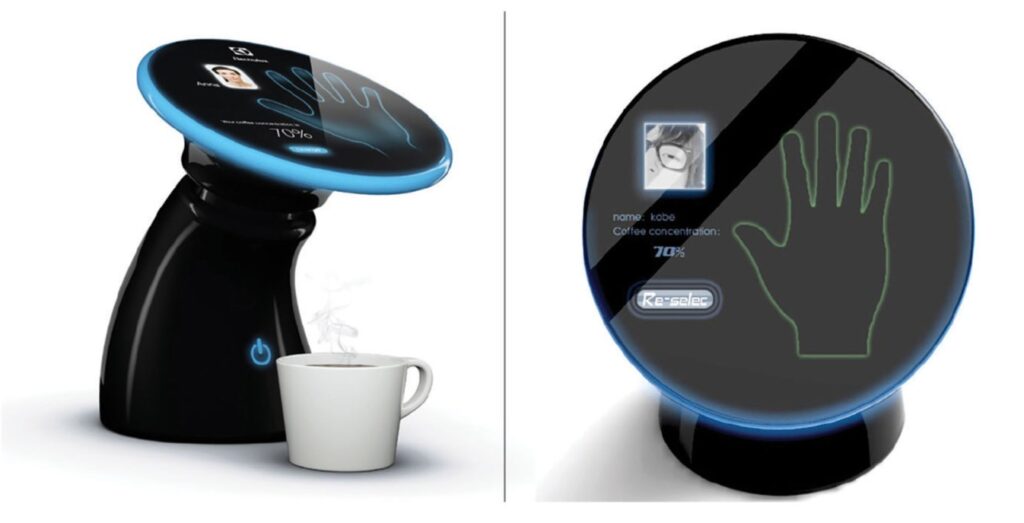
The Study Design
Both groups evaluated the same concept. The only difference was viewing time.
Short Exposure
15 seconds only.
Extended Exposure
As long as they wanted.
Both groups were then asked:
- Likelihood to purchase
- What they liked or disliked
- Why they would or would not buy
- Overall reaction to the concept
What Both Groups Understood
The core message was understood quickly in both scenarios.
Respondents consistently recognized the same basic idea:
- Personalized coffee
- Stored user preferences
- Handprint recognition
Representative verbatim responses included:
- “Customized coffee for each person verified by hand print scanner.”
- “This coffee maker uses the users hand print to remember their coffee preferences.”
- “This coffeemaker is very customizable and stores each person's unique coffee preference.”
The concept did not have a communication problem.
The real issue was whether that idea translated into something respondents would actually want to buy.
What Changed With More Time
The difference was not understanding.
The difference was how buyers judged the concept after more reflection.
Short Exposure responses focused on immediate signals:
- Interesting
- Innovative
- Useful
- Different
- Odd or unnecessary
Representative verbatim responses included:
- “This is really cool.”
- “Looks like something from the future.”
- “It makes this coffee maker seem very new and different.”
Extended Exposure responses moved into practical judgment.
Respondents began asking:
- Would this fit my household?
- Do I actually need this?
- Is the technology worth the complexity?
- Who is this really for?
Where Demand Narrowed
More time did not reduce stated purchase likelihood.
It revealed where the concept fit naturally into buyers’ lives—and where it did not.
“I live alone, so I do not need it.”
That single comment captures an important truth:
A concept can be appealing in theory, but irrelevant in practice.
Additional time often reveals these real-world screens:
- Household fit
- Need relevance
- Complexity tolerance
- Daily usefulness
Those screens narrow the real market.
Three Types of Buyers Emerged
1. Enthusiasts
Immediate and sustained interest.
- “I would love to try this product.”
- “I want one now.”
- “This would be handy in my house.”
2. Skeptics
Interested, but unconvinced the concept solved a meaningful problem.
- “Cool idea, but unnecessary.”
- “It seems a bit high tech.”
“My first thought was overkill for a coffee pot.”
3. Rejectors
Excluded the concept quickly due to lack of relevance or dislike of the premise.
- “I don't like the hand print idea.”
- “The world is getting ridiculous.”
The issue was not understanding.
It was whether the concept entered the decision set at all.
Where Research Can Overstate Opportunity
If only extended review is measured, research often reflects:
- How respondents justify reactions
- What sounds logical after thinking
- Later-stage tradeoffs and explanations
That information is useful.
But it is not the same as what created the first reaction.
“This is really cool.”
Early interest and final demand are not the same thing.
Two Different Types of Insight
1. First Reaction (Short Exposure)
- Interest
- Novelty
- Credibility
- Confusion
- Dismissal
2. Later Reflection (Extended Exposure)
- Household fit
- Need relevance
- Value vs complexity
- Who it is actually for
Most concept testing captures the second—and mistakes it for the first.
The Decision System
At Visions Research, we model the full pathway:
Awareness → Consideration → Evaluation → Choice → Market Outcome
This study highlights how demand is shaped across that pathway:
- Awareness: Initial interest formed quickly
- Consideration: Additional time revealed whether the concept fits respondents’ lives
- Evaluation: Buyers questioned value, complexity, and real need
- Choice: Final decisions largely reflect what survived earlier stages of the process
Most research focuses heavily on stated purchase likelihood at the end of the process.
But many outcomes are determined much earlier—when buyers decide whether a concept is relevant, credible, necessary, and worth further thought.
Most research asks: Why would you buy this?
A better question is: What made this concept enter—or fail to enter—the decision set in the first place?
The Result
Most research describes behavior after reflection.
Understanding behavior also requires knowing whether respondents fully understood what they were evaluating. See our article on global qualitative interviews.
We focus on what drives outcomes.
- What creates initial interest
- What allows a concept to enter consideration
- What causes demand to leak out before choice is made
That is how pricing, positioning, innovation, and strategy become more realistic—and more predictive of how markets actually work.
It also explains why traditional stated-preference models can misread markets. See what conjoint often misses.
Frequently Asked Questions
Why do concept tests fail?
Because purchase intent alone may not reflect real-life relevance, need, context, or competitive behavior.
Is purchase intent a good predictor of demand?
It can be useful, but it often overstates true demand when practical barriers are ignored.
How can concept testing be improved?
By measuring awareness, relevance, context, credibility, and decision-stage behavior—not just stated interest.
Next Step:
Explore the Decision System Framework →
If your concept tests well but market adoption remains uncertain, we help clients identify where demand is created—and where it is lost.